Correct Answer

verified
 1-butene; 2-butene ...
View Answer
Correct Answer
verified
1-butene; 2-butene ...View Answer
A) Ethyl acetate has less energy/mass than butanol.
B) Ethyl acetate has more energy/mass than butanol.
C) The two compounds have roughly the same energy/mass.
D) These are not two different compounds and so must have the same energy/mass.
E) There is no basis for determining this without some form of enthalpy values.
G) B) and D)
Correct Answer
verified
Correct Answer
verified
A) 180°.
B) 120°.
C) 90°.
D) 109.5°.
E) 60°.
G) C) and E)
Correct Answer
verified
Correct Answer
verified
A) a monomer.
B) an oligomer.
C) a functional group.
D) a synthetic unit.
E) an isomer.
G) C) and D)
Correct Answer
verified
Correct Answer
verified
A) 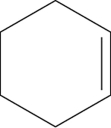
B) 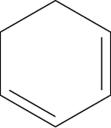
C) 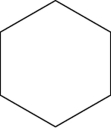
D) 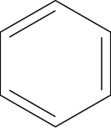
F) A) and B)
Correct Answer
verified
Correct Answer
verified
A) two, because of resonance
B) two, because of geometrical isomerism
C) two, because the double bond can be in either one of two locations
D) none, because the two skeletal structures can be superimposed
E) none, because double bonds always occur on the right in alkenes
G) A) and E)
Correct Answer
verified
Correct Answer
verified
A) CO < CH3OCH3 < CH3OH < C8H18
B) CH3OCH3 < CO < CH3OH < C8H18
C) CO < CH3OH < CH3OCH3 < C8H18
D) C8H18 < CO < CH3OH < CH3OCH3
E) C8H18 < CH3OCH3 < CH3OH < CO
G) None of the above
Correct Answer
verified
Correct Answer
verified
A) an alkane.
B) an alkene.
C) an alkyne.
D) either an alkane or an alkene.
E) either an alkene or an alkyne.
G) B) and D)
Correct Answer
verified
Correct Answer
verified
A) C5H7
B) C5H8
C) C5H9
D) C5H10
E) C5H5
G) None of the above
Correct Answer
verified
Correct Answer
verified
A) C4H5O2
B) C4H6O2
C) C4H7O2
D) C4H8O2
E) C4H10O2
G) A) and E)
Correct Answer
verified
Correct Answer
verified
A) because it would decompose to methane and ammonia
B) because it would not be volatile as a polyatomic ion
C) because it would melt in the acid
D) because it would decompose to carbon, hydrogen, and nitrogen
E) because it would have a different three-dimensional structure
G) A) and E)
Correct Answer
verified
Correct Answer
verified
A) alcohol
B) ester
C) amine
D) ether
E) carbonyl
G) B) and C)
Correct Answer
verified
Correct Answer
verified
A) I only
B) II only
C) III only
D) IV only
E) Bonds I-IV are all involved in polymerization.
G) A) and C)
Correct Answer
verified
Correct Answer
verified
A) carbon with hydrogen and oxygen in the ratio 2:1.
B) carbon with hydrogen and oxygen in any ratio.
C) only carbon and hydrogen.
D) carbon, hydrogen, and any functional groups.
E) carbon and any other elements.
G) A) and D)
Correct Answer
verified
Correct Answer
verified
A) spandex
B) nylon
C) PETE
D) poly(propylene)
E) polyester
G) A) and C)
Correct Answer
verified
Correct Answer
verified
Correct Answer
verified
The molecules that comprise structural, ...View Answer
Correct Answer
verified
View Answer
A) n-octane
B) n-hexadecane
C) n-octadecane
D) n-decane
E) 1,16-dimethylhexadecane
G) All of the above
Correct Answer
verified
Correct Answer
verified
A) decrease odor.
B) promote complete combustion.
C) decrease octane rating.
D) make the fuel less volatile.
E) increase fuel value.
G) None of the above
Correct Answer
verified
Correct Answer
verified
A) the fact that electrons can move very quickly from one resonance form to another.
B) adjacent 2pz orbitals each having one electron.
C) Wade's rules.
D) double-headed arrows.
E) Cooper pairs.
G) A) and D)
Correct Answer
verified
Correct Answer
verified
A) single; linear; sp
B) single; linear; sp3
C) double; trigonal planar; sp2
D) double; tetrahedral; sp3
E) triple; linear; sp
G) B) and C)
Correct Answer
verified
Correct Answer
verified
Showing 41 - 60 of 129
Related Exams