Filters
Question type

Study Flashcards

At a certain temperature the reaction CO2(g) + H2(g) ⇄ CO(g) + H2O(g) 2 Has Kc = 2.50. If 2.00 mol of carbon dioxide and 1.5 mol of hydrogen are placed in a 5.00 L vessel and equilibrium is established, what will be the concentration of carbon monoxide?


A) 0.091 M
B) 0.191 M
C) 0.209 M
D) 0.913 M
E) 1.05 M

F) A) and E)
G) D) and E)

Correct Answer

verifed

verified

The equilibrium constant for the reaction of bromine with chlorine to form bromine monochloride is 58.0 at a certain temperature. Br2(g) + Cl2(g) ⇄ 2BrCl(g) What is the equilibrium constant for the following reaction? BrCl(g) ⇄ ½Br2(g) + ½Cl2(g)


A) 2.97 × 10 4
B) 1.72 × 10 2
C) 3.45 × 10 2
D) 1.31 × 10 1
E) > 1.00

F) A) and D)
G) B) and E)

Correct Answer

verifed

verified

At 850°C, the equilibrium constant Kp for the reaction C(s) + CO2(g) ⇄ 2CO(g) Has a value of 10.7. If the total pressure in the system at equilibrium is 1.000 atm, what is the partial pressure of carbon monoxide?


A) 0.362 atm
B) 0.489 atm
C) 0.667 atm
D) 0.915 atm
E) 0.921 atm

F) C) and D)
G) B) and E)

Correct Answer

verifed

verified

The equilibrium constant, Kc, for the decomposition of COBr2 COBr2(g) ⇄ CO(g) + Br2(g) Is 0.190. What is Kc for the following reaction? 2CO(g) + 2Br2(g) ⇄ 2COBr2(g)


A) 0.0361
B) 2.63
C) 5.62
D) 10.5
E) 27.7

F) All of the above
G) None of the above

Correct Answer

verifed

verified

When a reaction system reaches equilibrium, the forward and reverse reactions stop.

A) True
B) False

Correct Answer

verifed

verified

Consider the reversible reaction: 2NO2(g) ⇄ N2O4(g) If the concentrations of both NO2 and N2O4 are 0.016 mol L1, what is the value of Qc?


A) 0.016
B) 0.50
C) 1.0
D) 2.0
E) 63

F) A) and E)
G) B) and C)

Correct Answer

verifed

verified

Unless ΔH°rxn = 0, a change in temperature will affect the value of the equilibrium constant Kc.

A) True
B) False

Correct Answer

verifed

verified

Consider the equilibrium reaction: H2(g) + Br2(g) ⇄ 2HBr(g) Which of the following correctly describes the relationship between Kc and Kp for the reaction?


A) K p = K c
B) K p = ( RT) K c
C) K p = ( RT) 2 K c
D) K p = K c / RT
E) K p = K c / ( RT) 2

F) C) and E)
G) A) and B)

Correct Answer

verifed

verified

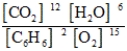
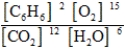
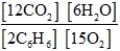
Write the mass-action expression, Qc, for the following chemical reaction equation. 2C6H6(g) + 15O2(g) ⇄ 12CO2(g) + 6H2O(g)


A) Write the mass-action expression, Q<sub>c</sub>, for the following chemical reaction equation. 2C<sub>6</sub>H<sub>6</sub>(g)  + 15O<sub>2</sub>(g)  ⇄ 12CO<sub>2</sub>(g)  + 6H<sub>2</sub>O(g)  A)    B)    C)    D)    E)
B) Write the mass-action expression, Q<sub>c</sub>, for the following chemical reaction equation. 2C<sub>6</sub>H<sub>6</sub>(g)  + 15O<sub>2</sub>(g)  ⇄ 12CO<sub>2</sub>(g)  + 6H<sub>2</sub>O(g)  A)    B)    C)    D)    E)
C) Write the mass-action expression, Q<sub>c</sub>, for the following chemical reaction equation. 2C<sub>6</sub>H<sub>6</sub>(g)  + 15O<sub>2</sub>(g)  ⇄ 12CO<sub>2</sub>(g)  + 6H<sub>2</sub>O(g)  A)    B)    C)    D)    E)
D) Write the mass-action expression, Q<sub>c</sub>, for the following chemical reaction equation. 2C<sub>6</sub>H<sub>6</sub>(g)  + 15O<sub>2</sub>(g)  ⇄ 12CO<sub>2</sub>(g)  + 6H<sub>2</sub>O(g)  A)    B)    C)    D)    E)
E) Write the mass-action expression, Q<sub>c</sub>, for the following chemical reaction equation. 2C<sub>6</sub>H<sub>6</sub>(g)  + 15O<sub>2</sub>(g)  ⇄ 12CO<sub>2</sub>(g)  + 6H<sub>2</sub>O(g)  A)    B)    C)    D)    E)

F) A) and E)
G) None of the above

Correct Answer

verifed

verified

At high temperatures, carbon reacts with O2 to produce CO as follows: C(s) + O2(g) ⇄ 2CO(g) . When 0.350 mol of O2 and excess carbon were placed in a 5.00-L container and heated, the equilibrium concentration of CO was found to be 0.060 M. What is the equilibrium constant, Kc, for this reaction?


A) 0.010
B) 0.072
C) 0.090
D) 0.17
E) 1.2

F) None of the above
G) A) and E)

Correct Answer

verifed

verified

Changing the amount of a solid reactant or product in an equilibrium reaction will not affect the amounts of the other reactants and products present at equilibrium.

A) True
B) False

Correct Answer

verifed

verified

In water, the following equilibrium exists: H+(aq) + OH(aq) ⇄ H2O(l) In pure water at 25°C, the concentration of H+ ions is 1.00 × 10⁷ mol/L. Calculate the value of the equilibrium constant for the reaction as written above.


A) 1.00 × 10 14
B) 1.00 × 10 12
C) 1.00 × 10 14
D) 1.00 × 10 12
E) 5.55 × 10 15

F) A) and C)
G) C) and D)

Correct Answer

verifed

verified

What is the mass-action expression, Qc, for the following chemical reaction? PbO(s) + CO(g) ⇄ Pb(l) + CO2(g)


A) What is the mass-action expression, Q<sub>c</sub>, for the following chemical reaction? PbO(s)  + CO(g)  ⇄ Pb(l)  + CO<sub>2</sub>(g)  A)    B)    C)    D)    E) None of these choices are correct.
B) What is the mass-action expression, Q<sub>c</sub>, for the following chemical reaction? PbO(s)  + CO(g)  ⇄ Pb(l)  + CO<sub>2</sub>(g)  A)    B)    C)    D)    E) None of these choices are correct.
C) What is the mass-action expression, Q<sub>c</sub>, for the following chemical reaction? PbO(s)  + CO(g)  ⇄ Pb(l)  + CO<sub>2</sub>(g)  A)    B)    C)    D)    E) None of these choices are correct.
D) What is the mass-action expression, Q<sub>c</sub>, for the following chemical reaction? PbO(s)  + CO(g)  ⇄ Pb(l)  + CO<sub>2</sub>(g)  A)    B)    C)    D)    E) None of these choices are correct.
E) None of these choices are correct.

F) B) and C)
G) B) and E)

Correct Answer

verifed

verified

The reaction quotient, Qc, for a reaction has a value of 75 while the equilibrium constant, Kc, has a value of 195. Which of the following statements is accurate?


A) The reaction must proceed to the left to establish equilibrium.
B) The reaction must proceed to the right to establish equilibrium.
C) The concentrations of the products will be much smaller than the concentrations of the reactants when the system is at equilibrium.
D) The concentrations of the products will be about the same as the concentrations of the reactants when the system is at equilibrium.
E) None of these choices are correct.

F) A) and E)
G) A) and D)

Correct Answer

verifed

verified

The reaction system CS2(g) + 4H2(g) ⇄ CH4(g) + 2H2S(g) Is at equilibrium. Which of the following statements describes the behavior of the system if the partial pressure of carbon disulfide is reduced?


A) As equilibrium is reestablished, the partial pressure of carbon disulfide increases.
B) As equilibrium is reestablished, the partial pressure of hydrogen decreases.
C) As equilibrium is reestablished, the partial pressure of methane, CH 4, increases.
D) As equilibrium is reestablished, the partial pressures of hydrogen and hydrogen sulfide decrease.
E) As equilibrium is reestablished, all the partial pressures will increase.

F) B) and E)
G) B) and C)

Correct Answer

verifed

verified

Carbon monoxide and chlorine combine in an equilibrium reaction to produce the highly toxic product, phosgene (COCl2) CO(g) + Cl2(g) ⇄ COCl2(g) If the equilibrium constant for this reaction is Kc = 248, predict, if possible, what will happen when the reactants and product are combined with the concentrations shown. [CO] = [Cl2] = 0.0200 M; [COCl2] = 0.0992 M


A) The reaction will proceed to the right.
B) The reaction will proceed to the left.
C) The reaction is at equilibrium, and no change in concentrations will occur.
D) The container volume needs to be specified before a prediction can be made.
E) The temperature needs to be specified before a prediction can be made.

F) C) and D)
G) B) and C)

Correct Answer

verifed

verified

The reaction system POCl3(g) ⇄ POCl(g) + Cl2(g) Is at equilibrium. Which of the following statements describes the behavior of the system if POCl is added to the container?


A) The forward reaction will proceed to establish equilibrium.
B) The reverse reaction will proceed to establish equilibrium.
C) The partial pressures of POCl 3 and POCl will remain steady while the partial pressure of chlorine increases.
D) The partial pressure of chlorine remains steady while the partial pressures of POCl 3 and POCl increase.
E) The partial pressure of chlorine will increase while the partial pressure of POCl decreases.

F) A) and E)
G) C) and D)

Correct Answer

verifed

verified

Consider the following two equilibria and their respective equilibrium constants: (1) NO(g) + ½O2(g) ⇄ NO2(g) (2) 2NO2(g) ⇄ 2NO(g) + O2(g) Which one of the following is the correct relationship between the equilibrium constants K1 and K2?


A) K 2 = 2/ K 1
B) K 2 = (1/ K 1) 2
C) K 2 = − K 1/2
D) K 2 = 1/(2 K 1)
E) K 2 = 1/(2 K 1) 2

F) A) and C)
G) D) and E)

Correct Answer

verifed

verified

Carbon monoxide and chlorine combine in an equilibrium reaction to produce the highly toxic product, phosgene (COCl2) CO(g) + Cl2(g) ⇄ COCl2(g) If the equilibrium constant for this reaction is Kc = 248, predict, if possible, what will happen when the reactants and product are combined with the concentrations shown. [CO] = [Cl2] = 0.010 M; [COCl2] = 0.070 M


A) The reaction will proceed to the right.
B) The reaction will proceed to the left.
C) The reaction is at equilibrium, and no change in concentrations will occur.
D) The container volume needs to be specified before a prediction can be made.
E) The temperature needs to be specified before a prediction can be made.

F) All of the above
G) B) and E)

Correct Answer

verifed

verified

Consider the equilibrium reaction shown below. B2(g) ⇄ 2B(g) If the rate constants are: kfwd = 7.00 × 10⁵s1 and krev = 2.00 × 10⁵ L mol1 s1, what is the value of Kc under these conditions?


A) 1.75 × 10 5
B) 3.50
C) 0.286
D) 5.71 × 10 6
E) 1.40 × 10 10

F) A) and E)
G) A) and D)

Correct Answer

verifed

verified

Showing 41 - 60 of 98

Related Exams

Show Answer