A) 2.17 × 10 −8
B) 4.10 × 10 −4
C) 7.65 × 10 −2
D) 7.75
E) None of these choices are correct.
G) A) and B)
Correct Answer

verified
Correct Answer
verified
A) The partial pressure of hydrogen bromide will increase.
B) The partial pressure of hydrogen will increase.
C) The partial pressure of hydrogen bromide and bromine will increase.
D) There will be no effect on the partial pressure of any of the gases.
E) Need to know the initial pressure, volume, and temperature before any of the above predictions can be made.
G) A) and B)
Correct Answer
verified
Correct Answer
verified
B) False
Correct Answer
verified
Correct Answer
verified
A) 1.3 × 10 −8 s −1
B) 7.8 × 10 7 s −1
C) 2 × 10 4 s −1
D) 5.0 × 10 −5 s −1
E) None of these choices are correct.
G) A) and C)
Correct Answer
verified
Correct Answer
verified
A) Removing products as they are formed
B) Adding more of a reactant
C) Adding a catalyst
D) Increasing the pressure, in a gas-phase reaction
E) Change in temperature
G) B) and C)
Correct Answer
verified
Correct Answer
verified
A) 
B) 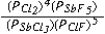
C) 
D) 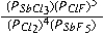
E) None of these choices are correct.
G) C) and D)
Correct Answer
verified
Correct Answer
verified
A) Yes.
B) No, the forward reaction must proceed to establish equilibrium.
C) No, the reverse reaction must proceed to establish equilibrium.
D) Need to know the volume of the container before deciding.
E) Need to know the starting concentrations of all substances before deciding.
G) A) and C)
Correct Answer
verified
Correct Answer
verified
B) False
Correct Answer
verified
Correct Answer
verified
A) The partial pressure of carbon dioxide will increase.
B) The partial pressure of carbon dioxide will decrease.
C) The partial pressure of carbon dioxide will be unchanged.
D) The amounts of all products will be greater when equilibrium is reestablished.
E) None of these choices are correct.
G) B) and D)
Correct Answer
verified
Correct Answer
verified
A) know the kinetic rate law for the reaction.
B) know the mechanism for the reaction.
C) have a properly balanced chemical equation.
D) have values for the concentrations of the reactants.
E) know the limiting reactant.
G) B) and D)
Correct Answer
verified
Correct Answer
verified
A) 
B) 
C) 
D) 
E) None of these choices are correct.
G) B) and E)
Correct Answer
verified
Correct Answer
verified
B) False
Correct Answer
verified
Correct Answer
verified
A) 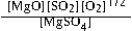
B) 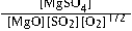
C) 
D) 
E) None of these choices are correct.
G) A) and C)
Correct Answer
verified
Correct Answer
verified
A) 1.81 × 10 −16
B) 1.83 × 10 −14
C) 4.48 × 10 −13
D) 1.10 × 10 −11
E) 1.11 × 10 −9
G) All of the above
Correct Answer
verified
Correct Answer
verified
A) 
B) 
C) 
D) 
E) 
G) C) and D)
Correct Answer
verified
Correct Answer
verified
A) < 0.100 M
B) 0.339 M
C) 0.678 M
D) 6.78 M
E) 13.56 M
G) A) and C)
Correct Answer
verified
Correct Answer
verified
A) Adding N 2 gas to double the pressure
B) Adding more solid NaOH
C) Decreasing the volume of the container
D) Removing half of the solid NaHCO 3
E) None of these choices are correct.
G) A) and C)
Correct Answer
verified
Correct Answer
verified
A) High temperature, high pressure
B) Low temperature, high pressure
C) High temperature, low pressure
D) Low temperature, low pressure
E) None of these choices are correct.
G) C) and D)
Correct Answer
verified
Correct Answer
verified
Showing 81 - 98 of 98
Related Exams