A) 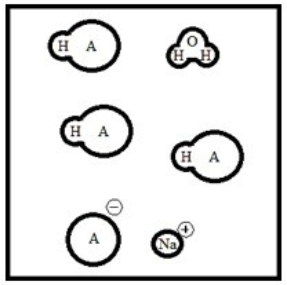
B) 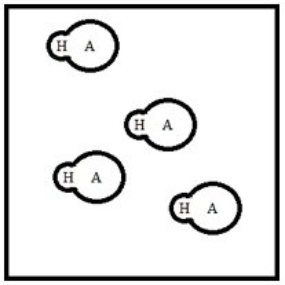
C) 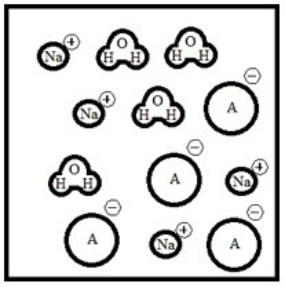
D) 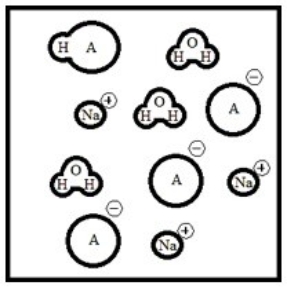
E) 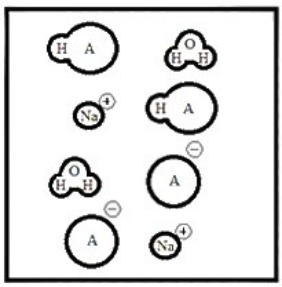
G) B) and E)
Correct Answer

verified
Correct Answer
verified
A) ![Write the ion product expression for calcium phosphate, Ca<sub>3</sub>(PO<sub>4</sub>) <sub>2</sub>. A) B) C) D) E) (3 × [Ca<sup>2+</sup>]) (2 × [PO<sub>4</sub><sup>3-</sup> ]](https://d2lvgg3v3hfg70.cloudfront.net/TB8482/11eb6c5c_3a61_a21d_8d9d_87b97818bcc8_TB8482_11.jpg)
B) ![Write the ion product expression for calcium phosphate, Ca<sub>3</sub>(PO<sub>4</sub>) <sub>2</sub>. A) B) C) D) E) (3 × [Ca<sup>2+</sup>]) (2 × [PO<sub>4</sub><sup>3-</sup> ]](https://d2lvgg3v3hfg70.cloudfront.net/TB8482/11eb6c5c_3a61_a21e_8d9d_9967182a23e2_TB8482_11.jpg)
C) ![Write the ion product expression for calcium phosphate, Ca<sub>3</sub>(PO<sub>4</sub>) <sub>2</sub>. A) B) C) D) E) (3 × [Ca<sup>2+</sup>]) (2 × [PO<sub>4</sub><sup>3-</sup> ]](https://d2lvgg3v3hfg70.cloudfront.net/TB8482/11eb6c5c_3a61_c92f_8d9d_ff083b0d64b4_TB8482_11.jpg)
D) ![Write the ion product expression for calcium phosphate, Ca<sub>3</sub>(PO<sub>4</sub>) <sub>2</sub>. A) B) C) D) E) (3 × [Ca<sup>2+</sup>]) (2 × [PO<sub>4</sub><sup>3-</sup> ]](https://d2lvgg3v3hfg70.cloudfront.net/TB8482/11eb6c5c_3a61_f040_8d9d_65a1849e9f7f_TB8482_11.jpg)
E) (3 × [Ca2+]) (2 × [PO43- ]
G) C) and D)
Correct Answer
verified
Correct Answer
verified
A) 2.87
B) 4.98
C) 5.13
D) 7.00
E) 11.13
G) D) and E)
Correct Answer
verified
Correct Answer
verified
Correct Answer
verified
Prepare a solution h...View Answer
Correct Answer
verified
View Answer
A) 4.65
B) 4.71
C) 4.56
D) 4.84
E) 5.07
G) A) and E)
Correct Answer
verified
Correct Answer
verified
A) Shift ion
B) Shift reagent
C) Equilibrium ion
D) Common ion effect
E) Ion adduct
G) A) and D)
Correct Answer
verified
Correct Answer
verified
A) 1.00
B) 3.13
C) 10.87
D) 11.05
E) 13.14
G) A) and B)
Correct Answer
verified
Correct Answer
verified
A) Yes, the ppt is Ba(NO3) 2.
B) Yes, the ppt is NaNO3.
C) Yes, the ppt is BaCO3.
D) Yes, the ppt is Na2CO3.
E) No, a precipitate will not form.
G) B) and D)
Correct Answer
verified
Correct Answer
verified
A) AgF
B) AgCN
C) CO2
D) NaCl
E) CH3COOK
G) A) and B)
Correct Answer
verified
Correct Answer
verified
B) False
Correct Answer
verified
Correct Answer
verified
Correct Answer
verified
Henderson-...View Answer
Correct Answer
verified
View Answer
A) 4
B) 6
C) 8
D) 9
E) 12
G) A) and B)
Correct Answer
verified
Correct Answer
verified
Correct Answer
verified
Correct Answer
verified
A) 4.57
B) 4.52
C) 4.87
D) 4.92
E) 4.97
G) All of the above
Correct Answer
verified
Correct Answer
verified
Correct Answer
verified
Correct Answer
verified
A) lower than the pKa.
B) higher than the pKa.
C) always acidic.
D) always basic.
E) equal to the pKa.
G) C) and E)
Correct Answer
verified
Correct Answer
verified
A) The acid can only be a strong monoprotic acid.
B) The acid can only be a weak monoprotic acid.
C) The acid must be a strong acid, but could be either monoprotic, diprotic, or polyprotic.
D) The acid must be a weak acid, but could be either monoprotic, diprotic, or polyprotic.
E) The acid could be either a strong or weak acid, and could be either a monoprotic, diprotic, orpolyprotic acid.
G) D) and E)
Correct Answer
verified
Correct Answer
verified
A) 3.2 x 10⁻⁵
B) 3.2 x 10⁻¹⁰
C) 1.8 x 10⁻³
D) 7.0 x 10⁻⁷
E) HA is a strong acid
G) All of the above
Correct Answer
verified
Correct Answer
verified
B) False
Correct Answer
verified
Correct Answer
verified
Correct Answer
verified
Correct Answer
verified
Showing 101 - 120 of 133
Related Exams