A) an essential element in the human body.
B) toxic because it results in an increase in the production of ATP.
C) toxic because it binds to the sulfhydryl group in proteins and enzymes.
D) used in high concentrations in ancient cosmetics.
E) None of these choices is correct.
G) C) and D)
Correct Answer

verified
Correct Answer
verified
A) XY
B) XY2
C) XY3
D) XY5
E) All may represent stable interhalogen compounds.
G) B) and C)
Correct Answer
verified
Correct Answer
verified
A) Sr2+(aq) + H2(g) + O2(g)
B) Sr2+(aq) + H2(g) + OH-(aq)
C) Sr(s) + H2(g) + OH-(aq)
D) Sr(s) + H3O+(aq)
E) Sr2+(aq) + H-(aq)
G) A) and B)
Correct Answer
verified
Correct Answer
verified
A) NH3,ammonia.
B) H3PO4,phosphoric acid.
C) NaOH,sodium hydroxide.
D) Na2CO3,sodium carbonate.
E) H2SO4,sulfuric acid.
G) None of the above
Correct Answer
verified
Correct Answer
verified
Correct Answer
verified
Correct Answer
verified
A) 
B) 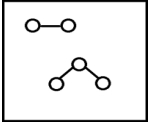
C) 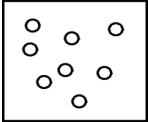
D) 
E) 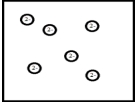
G) All of the above
Correct Answer
verified
Correct Answer
verified
Correct Answer
verified
Correct Answer
verified
A) N
B) S
C) C
D) O
E) Cl
G) B) and D)
Correct Answer
verified
Correct Answer
verified
A) strong oxidizing agents.
B) strong reducing agents.
C) strong acids.
D) strong bases.
E) amphoteric.
G) C) and E)
Correct Answer
verified
Correct Answer
verified
A) Na
B) N
C) B
D) Ar
E) P
G) D) and E)
Correct Answer
verified
Correct Answer
verified
A) Detergents
B) Toothpaste
C) Fertilizers
D) Flame retardants
E) All of the answers are correct.
G) A) and B)
Correct Answer
verified
Correct Answer
verified
Correct Answer
verified
Correct Answer
verified
A) NH4+
B) H2O
C) H2
D) Zn2+
E) All of the species are products.
G) B) and D)
Correct Answer
verified
Correct Answer
verified
A) Na2O
B) Al2O3
C) BaO
D) SiO2
E) More that one of these oxides are amphoteric.
G) A) and C)
Correct Answer
verified
Correct Answer
verified
A) CO
B) CO2
C) NF3
D) NO
E) CF4
G) A) and C)
Correct Answer
verified
Correct Answer
verified
A) K(s) + H2(g) + OH-(aq)
B) K(s) + H2(g) + O2(g)
C) KOH(s) + O2(g)
D) K+(aq) + H2(g) + O2(g)
E) K+(aq) + H2(g) + OH-(aq)
G) A) and E)
Correct Answer
verified
Correct Answer
verified
A) 1
B) 4
C) 3
D) 5
E) 2
G) A) and C)
Correct Answer
verified
Correct Answer
verified
A) These substances have distinct stoichiometric formulas like ionic hydrides.
B) Hydrogen forms bonds with the metals by donating its electron to the valence band of the metal.
C) Hydrogen molecules and atoms occupy holes within the crystal structure of the metal.
D) These substances are poor catalysts.
E) These hydrides are stabilized by hydrogen bonding forces.
G) B) and C)
Correct Answer
verified
Correct Answer
verified
A) Se-I
B) Na-Br
C) H-F
D) Cl-Cl
E) H-Cl
G) B) and C)
Correct Answer
verified
Correct Answer
verified
B) False
Correct Answer
verified
Correct Answer
verified
Showing 21 - 40 of 119
Related Exams